Forest
as source of livelihood
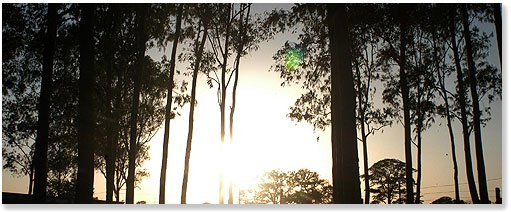
Forest as source of livelihood
for poor people in Jharkhand : Around 29% of the
area in Jharkhand is under forest cover as against
23% in India as a whole. Jharkhand accounts for
3.4% of the total forest cover of the country and
ranks 10th among all states. Forests have
contributed about 1.3% of the State’s GSDP in
2005-06 which is less than half of what used to be
in 2001-02. Jharkhand’s poverty ratio was 44% as
against the national average of 26% in 2000. The
rural poverty though was highest among all states
at 49%. Of the 49% rural poverty, 75% are
people who live either inside or on the periphery
of the forests. The survival of these 75% poverty
stricken people depends a whole lot on the forests
resources as forests are their main source of
livelihood. This is more so during the lean season.
The extremely poor rural people
gather wood from the forests and carry them to the
urban areas where they sell them at distress
prices. Results from the recent Citizen’s Report
Card survey suggested that in the 400 households
surveyed. about 12 percent depend totally on the
forest during times of unemployment. Also, the
survey reported that most forest products are
collected for personal use.
The villagers living on the
periphery of forests normally collect fodder, fuel
wood and wooden poles for household use and
construction of homesteads. As per the findings of
Tata Energy Research Institute (TERI), fuel wood
collection ranges from 2 kg per household to 30 kg
per household per day. At least 70% of the fodder
requirement comes directly from the forests. They
also collect poles for construction of their
homes. On an average a household extracts around
6-10 poles from the forest in a period of three
years.
Forestry sector contributes
4 to 7 percent of employment and has very low
productivity in terms of per unit generation of
timber. In TSP districts, tribal populations
are in majority but there are tribal populations
in Other Area districts also and in these for
their livelihood the prime source is the forest.
The forests, being one of the most important
entity of the terrestrial ecological system which
is presently under extreme biotic pressure, is
still a renewable natural resource that
support not only human life but also providing
various habitat to millions of life forms,
attracts needs to manage iT scientifically to
sustain
Minor
Forest Produce (MFP)
MFP play an important role in
the livelihood support of tribal and forest
dwellers in terms of subsistence and income
generation. When agriculture is gradually ceasing
to be reliable, MFP sustains millions of tribals
by providing an alternate source for food and
income. The dependence is maximum on produces like
kendu leaf, mahua, char, tamarind, sal seed, amla,
etc.
Most of these products are
wasted for lack of post harvesting technology in
cleaning, packing, storage and processing.
The forest in Jharkhand
comprises of biological and geophysical
diversities. Due to variations of altitude and
rainfall diverse forest types and species are
available in Jharkhand forest. Many species are
economically important for the people living in &
around the forest areas. These people mainly
tribals are engaged in the collection of leaves,
barks, gums, roots, flowers, fruits and entire
plants from the forest areas for their livelihood
out of which many species are medicinally and
industrially important. Population wise
50%(approx) population are dependent on forest and
out of these 70% (approx) are BPL family. The
importance of forest thus can’t be over
emphasized.
Forest provides invaluable
income to milions of tribal people and forest
dwellers and, thereby, plays an important role in
their life support system. They depend on it for
food, fodder, medicines. entertainment and also
for their cultural practices. Despite forest being
an integral part of their life support system, the
state has not paid much attention on the
development and value addition of these products.
4.4 These products are covered under Minor
Forest Produce or (Non-Wood Forest Produce). These
are obtained from the forest and do not include
the wood. It has been the major source of revenue
in many states. In the Jharkhand State Kendu
leaves trade turnover was to the tune of
approximately Rs. 50 Crore in 2007-2008 and major
portion of which (75%) went to the indigenous
people as labour for collection of Kendu leaves.
Kendu leaf collection occurs in a short span of
two months which is a lean season (April and May)
for the villagers.
The
Extent of Minor Forest Produce
Sal seed had been
another major collection item which has reduced in
output due to short collection period, lack of
willpower and lack of proper marketing etc. It can
provide nearly Rs. 40 to 50 crore to the villagers
in terms of purchase price of the seeds. Oil
butter of Sal seed in an alternative of
cocoabutter hence it is used in Chocolate
manufacture. The Sal Seed cakes are good cattle
feed.
Tamarind Production is
about 2 lakh MT. at a minimum price of Rs. 6 per.
Kilo it will give 120 crore to the tribals Small
processing units like deseeding of tamarind,
tamarind paste will give jobs to the local people.
Self help group can run these small processing
units but there is no focus on these issues.
The flower of Palash
(Fire of forest) is very good non toxic natural
colour. Villagers boil flowers of palas during
Holi festival and pour that coloured water on each
other and play Holi. A processing plant can be
established and the dry colour can be obtained
which is used in carpet industries. This is
natural, organic colour. It will fetch a very
handsome price.
Mahulan (Bauhinia
leaves) leaves and its bark (Chop) are used for
making leaf plantes and ropes respectively, has
tremendous market in Southern India. Besides this,
acacia pods used as pot-pourri is being traded
internationally. It is collected in large amount
in Deoghar, Madhupur, Giridih, Singhbum areas and
exported from Tuticorin, Tamilnadu, So is the
market of the medicinal plants, gums and other
M.F.P. items.
Sal Leaf - Sal leaves
are collected from Sal trees and they are used in
making Sal plates, Dona by villagers. The
villagers sell the rough plates at the rate of Rs.
6.00 to 8.00 per 100 plates to the middle man.
These rough plates are converted in to hot
pressure plates and marketing sale price increase
from 6.00 rupees to 25.00 rupees per 100.
Anwala - After creation
of Jharkhand Anwala is planted in large scale.
Anwala fruits are collected by villagers and sold
@ of 5 to 6 rupees per Kg. Anwala is used in
making Chyavanprash, Murabba, Achar etc. Thus
value added to 40.00 rupees per Kg.
Medicinal Plants - A
variety of medicinal plants are grown in the
forest areas but its unscientific collection, poor
knowledge and non-availability of markets benefits
the people in small scale but the scope is
unlimited. The common varieties found in the
forests are safed Musali, Chiraita, Kalihari,
Mulaithi, Gudmar, Pathar-Chur, Tulasi, Anwa, Bel,
Brahmi, Satawar, Jatamanshi etc.
Chironji is sold at
Rs.400/- kg in Reliance fresh store. The traders
collect this valuable nut in the exchange of salt
or rice.
These Ayurvedic medicines cure
many disease without any side effects.
Tribals of Jharkhand cure
themselves with the medicinal plants. They know
the medicinal value and property of the plants.
This knowledge is not passing to the next
generation. A time may come when very few people
will know about the medicinal values of these
plants. Therefore survey and enlisting of these
plants is urgently required. Medicinal plants
will give income and jobs to the rural poor.
Value addition to
these plants in the state itself is also very
essential and it will give jobs.


